
SOS ECAB: Meet Prof. Caio Oliveira
Science of Synthesis Early Career Advisory Board (SOS ECAB)
Meet the members of the Science of Synthesis Early Career Advisory Board for 2025-2027!
Find out from the interview below, which field of organic chemistry they are most interested in and why, which chemist would they like to meet, which challenges they see for young upcoming chemists and how to handle them, and last but not least: what they do to relax after a busy day!
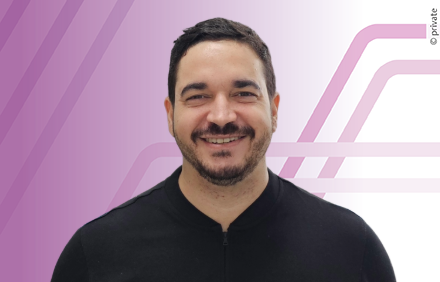
Six Questions to Prof. Caio Costa Oliveira
1. Which field of organic chemistry are you interested in the most and why?
I am most interested in the field of organic synthesis, focused on the development of catalytic methods to produce functional molecules.
I am drawn to this area because it enables us to deliver practical solutions to scientific and technological demands across a wide variety of disciplines. Since organic molecules are naturally present, or can be incorporated, almost everywhere, advancing these methods allows for broad, highly impactful applications.
2. If there is one thing you would like people to understand about your research, what would that be?
If there is one thing I would like people to understand about my research, it is that our group focuses on the design of organic molecules engineered to enhance both the stability and efficiency of solar cells. Through this approach, our work makes a direct and significant contribution to the sustainable generation of electrical energy.
3. What do you do to relax after a busy day?
To relax after a busy day, I enjoy reading, cooking, working out at the gym, and watching movies and television series.
4. Given the chance to meet any chemist (living or dead) who would it be and why?
If given the chance, I would choose to meet Sir Christopher Kelk Ingold. His extensive work on the physicochemical aspects of organic reactions is one of the most elegant and significant contributions to the history of organic chemistry. Furthermore, he helped establish a foundational terminology that remains in use to this day.
5. Which potential do you see in organic chemistry in the future?
I see the future of organic chemistry advancing on two main fronts: first, by delivering more efficient and sustainable methodologies to meet the demands of the fine chemical industry; and second, by tackling the complex challenge of raw biomass valorization. Coming from Brazil, I recognize that our rich biodiversity represents an incredible, underexplored asset for transforming natural resources into high-value commodities.
6. Which difficulties are there for young upcoming chemists in your field? Do you have any tips?
I believe that, regardless of the specific field, the greatest challenge is asking relevant scientific questions, securing the necessary funding to pursue the answers, and consistently delivering those findings to the scientific community.
My advice for navigating this in a healthy way is to find a research topic that brings you joy and continually renews your interest, regardless of whether the subject is currently trendy.
Join the Cheminar “Rising Stars in Organic Synthesis, Session 6”
Watch the Cheminar with our ECAB members Caio Oliveira, Rose Kennedy, Christian Malapit, Yang Yang, and Thieme Chemistry Journal Award recipients Masha Elkin and Melissa Ramirez. Join the live online seminar on November 10, 2026, or watch the recording afterward.