
Information for Science of Synthesis Authors
This page provides information for Science of Synthesis authors for guidance through the writing process and editorial stages, along with answers to some frequently asked questions. If you can’t find the information you need or have a specific inquiry, please contact the Science of Synthesis editorial team and we’ll be happy to assist you.

Editorial Guidelines
Our authors are invited to write a contribution for Science of Synthesis by our volume editors or by members of the Editorial Board. Upon accepting an invitation to write, the editorial office provides authors with resources designed to help with the preparation of a manuscript for submission. These files can also be found here.
Document Templates for Microsoft Word
Using the document template helps structure a contribution and is essential for preparing the proofs. The template’s styles assign text blocks to their specific roles in the manuscript (e.g., discussion text, method headings, experimental procedures). This effectively tags the information electronically at an early stage, which supports the editing process and the development of the electronic version of Science of Synthesis. Please note that the template’s appearance is generally not representative of the final typeset or electronic layout.
While the template is a useful tool, of greater importance is ensuring that the contribution meets the aims of Science of Synthesis articles: providing a critical evaluation of the reported synthetic methods (practical advantages, green issues, etc.), presenting selected examples in the preferred formats to illustrate scope/limitations, and including all necessary features (such as experimental procedures).
For guidance on these aspects, please refer to the sample chapters provided.
Instructions for using the templates:

Sample Chapters and Endnote Style
Below you will find some sample contributions from Science of Synthesis, both as the final published typset versions, and also examples of how a contribution would appear in the Word document template. Please refer to these for examples of presentation of the key features of Science of Synthesis articles.
Examples – Final published articles:
Examples – Word templates (before proof production):
If using Endnote to help prepare a Science of Synthesis contribution, an output style file for the correct formatting of Science of Synthesis references can be downloaded here:
Abstract Guidelines and Templates
Here you will find instructions and examples for preparing the required abstract for your chapter. The abstract serves as the primary online entry point to your contribution and may be used in search results, online navigation, and promotional activities. It should include a concise summary paragraph, a representative graphic, and a set of keywords. Authors are encouraged to make abstracts informative, engaging, and visually appealing.
Please take a look at the examples below.
FAQs (Frequently Asked Questions)
This page provides information for Science of Synthesis authors for guidance through the writing process and editorial stages, along with answers to some frequently asked questions. If you can’t find the information you need or have a specific inquiry, please contact the Science of Synthesis editorial team and we’ll be happy to assist you.
How do I sign the Imprimatur (permission to publish) digitally?
A step-by-step guide to creating and using a digital signature should have been sent to you with the authors agreement. If, after following these instructions, you still have problems, it is acceptable to print the agreement, sign it by hand, and send a scanned copy back to the Editorial Office by e-mail.
Does the document template have to be used?
Yes, please do. It is important for manuscript processing that the appropriate style names (e.g., H_Method) are attached to the heading paragraphs for each section. It is not important that formatting properties such as the font size, line spacing, or the number of lines per page match the document template. Please feel free to change these properties as long as the style naming is not affected. However, note that any formatting options in the document processing program except the style names are deleted after manuscript submission.
Is it acceptable to adjust the font size and spacing in my manuscript?
The font type and style (see above) of the text is important for its identification. Spacing/sizing is not important, but sticking to the template helps to give an idea of the estimated length of the chapter when coverted to final typeset pages.
For estimating the final length of a contribution, the following general rules should be used:
1.5 typewritten pages (template, with formulas/schemes) = 1 printed page
2 typewritten pages (template, without formulas/schemes) = 1 printed page
What structure drawing program should I be using?
If possible, please create schemes and figures using ChemDraw. If you do not have access to ChemDraw, the use of other drawing programs will be accepted, but this may result in longer manuscript processing times as a result of redrawing.
For graphics that show other items/images that chemical structures and reactions, other tools may be used but the submitted graphic files (tif, jpf, etc.) should be in good resolution (at least 300 dpi).
Latest News from the SOS Editorial Office

Japanese Scientists’ Great Contributions to SOS
Thieme Chemistry maintains close partnerships with organic chemists in Japan who make a significant contribution to the reference work Science of Synthesis.

SOS ECAB: Meet Prof. Christian A. Malapit
The Science of Synthesis Early Career Advisory Board (ECAB) is a 3-year program to help promote young talented chemists. Learn more about our ECAB members and read the short interview of Prof. Yang Yang.

SOS ECAB: Meet Prof. Yang Yang
The Science of Synthesis Early Career Advisory Board (ECAB) is a 3-year program to help promote young talented chemists. Learn more about our ECAB members and read the short interview of Prof. Yang Yang.
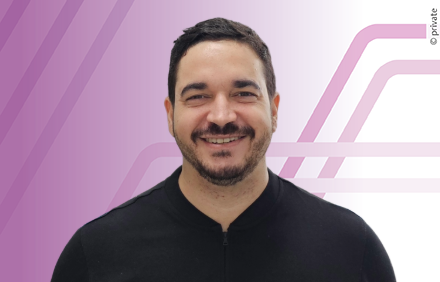
SOS ECAB: Meet Prof. Caio Costa Oliveira
The Science of Synthesis Early Career Advisory Board (ECAB) is a 3-year program to help promote young talented chemists. Learn more about our ECAB members and read the short interview of Prof. Caio C. Oliveira.
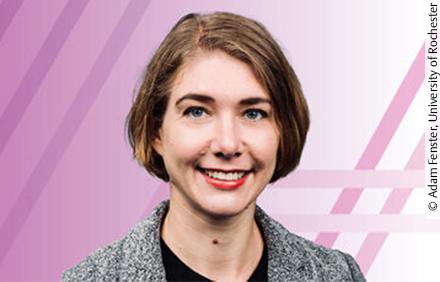
SOS ECAB: Meet Prof. C. Rose Kennedy
The Science of Synthesis Early Career Advisory Board (ECAB) is a 3-year program to help promote young talented chemists. Learn more about our ECAB members and read the short interview of Prof. C. Rose Kennedy
Interview with Former ECAB Member Prof. Emilio Carlos de Lucca
Read our interview with former SOS ECAB Member Emilio Carlos de Lucca as he shares insights on total synthesis, the future of organic chemistry, and the importance of science communication.

Call for Nominations for the 2027 Women in Chemistry (WiC) Awards!
Stuttgart: Call for nominations for the 2027 Dr. Margaret Faul Women in Chemistry and Women in the Chemical Industry Awards to recognize the outstanding achievements of women in organic chemistry is open until 11 December, 2026.

SOS ECAB: Meet Prof. Albert Granados Toda
The Science of Synthesis Early Career Advisory Board (ECAB) is a 3-year program to help promote young talented chemists. Learn more about our ECAB members and read the short interview of Prof. Albert Granados Toda
SOS: All FID-Chemie-Funded Licenses for 2026 Allocated!
Stuttgart: A limited number of SOS licences were available through the FID Chemie for researchers affiliated with publicly funded institutions in Germany. For the year 2026, all licences have been claimed and no additional SOS licences are currently available. Additional licences will be available by January 2027 at the latest.…
SOS ECAB: Meet Prof. Ana Bahamonde
The Science of Synthesis Early Career Advisory Board (ECAB) is a 3-year program to help promote young talented chemists. Learn more about our ECAB members and read the short interview of Prof. Ana Bahamonde
A Pleasure to Contribute: Advancing Electrochemical Fluorination with SOS
“Contributing to Science of Synthesis was a pleasure because it forces you to distil a large and fast-moving literature into what a synthetic chemist actually needs: trusted methods, clear context, and practical guidance. In our chapter on electrochemical fluorination, we set out to show how electrosynthesis can make fluorination more controlled and sustainable, and to provide a clear framework for selecting conditions across nucleophilic and electrophilic fluorine sources, including mediator-based strategies.”