

SOS! Learn How Science of Synthesis Can Help You!
When you are developing synthetic organic routes, Science of Synthesis (SOS) is the optimal resource that offers you the best methods and, therefore, the best results.
Expert-written, full-text reviews help you decide how to make your target molecules.
Unlike other databases, rather than providing countless hits, many of which are not of interest to organic chemists, SOS provides synthetically relevant, selected information, compiled by experts. Science of Synthesis provides full-text descriptions of selected organic transformations and synthetic methods as well as experimental procedures. The insightful, didactic reviews make it easy for you to weigh up the pros and cons of potential routes and choose the one that is right for you.
Learn from those who know! Methods are selected by experts in each area and are regularly updated.
Benefit from the experience of more than 2,500 world-renowned experts who have chosen the most important molecular transformations for a class of organic compounds and discuss their scope and limitations. They update the content of SOS regularly with new information and special topics of particular interest to the synthetic chemist, such as bioorthogonal chemistry and the use of electrochemistry in organic synthesis.
Rapidly gain an overview through the structured, systematic, logical, and consistent organization by functional group.
The coverage of synthetic methods in SOS is highly structured and systematically, logically, and consistently organized for each functional group. You can quickly get an overview of the different methods available to achieve a transformation and find out which methods are useful for a particular synthesis and which are not.
With the help of SOS you can go straight to the lab!
Experts have focused on selecting effective and practical experimental procedures that can be implemented quickly and easily in the laboratory. This enables you to get started immediately with your synthesis.
Find the information you need by text, structure, or reaction searching … or simply explore.
The SOS platform offers advanced search functions. You can search the text or find structures or reactions using the built-in drawing tool. Within the structure search, you can search for exact, substructure, or similar matches and filter options allow you to define the role of a compound in a reaction. The unique organization of SOS by functional group and then reaction type allows you to easily explore related methods. Science of Synthesis currently contains over 2500 reviews comprising 2.3 million molecules, 480,000 reactions, and over 60,000 experimental procedures.
Teach and learn organic chemistry using SOS.
Science of Synthesis is a valuable teaching and learning resource for all areas of synthetic organic chemistry. The knowledge platform offers you in-depth information and is ideal for helping you find key examples of reactions to include in lectures and courses, as well as for advanced studies and further reading around a topic. In addition, many of the reference library topics include didactic coverage of basic principles and concepts in the field, providing an ideal introduction to the area.
Choose the Right SOS Solution for You: SOS Platform, SOS eBooks, or SOS Datasets
The content of Science of Synthesis is available in three different formats. Depending on your needs, you can explore its wealth of knowledge either via the SOS Online Platform or within the SOS eBooks. Alternatively, you can use the SOS Reaction Datasets, where all the structures and reactions are in machine-readable format that can be used for cheminformatics applications, such as training algorithms.
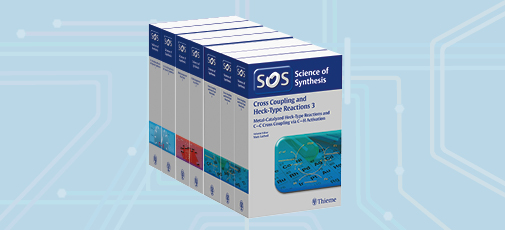
SOS Platform

SOS Platform: The Perfect Synthesis Solution for Your Company, Institution, or Research Group
SOS Datasets
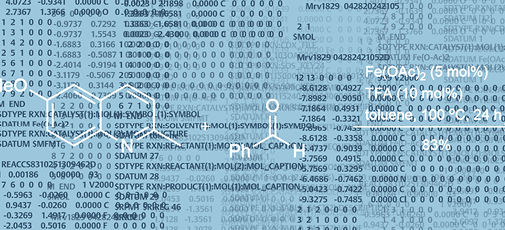
SOS Datasets: Science of Synthesis Knowledge in Machine-Readable Format
Chemistry You Can Trust! SOS is Edited by the Most Renowned Chemists

Editorial Board
The international editorial board of Science of Synthesis features world-renowned chemists from industry and academia. It is currently chaired by Executive Editor Prof. Erick M. Carreira.
Volume Editors and Reference Library Editors
Since 1909, hundreds of experienced chemists have been responsible for publishing Houben-Weyl and Science of Synthesis, and this tradition continues to this day.
Young Chemists: Shape the Future of Chemistry and Expand Your Network!

The SOS Early Career Advisory Board (ECAB)
The Science of Synthesis Early Career Advisory Board (ECAB) is a three-year program designed for young chemists. Science of Synthesis invites early-career researchers to apply to join the SOS ECAB. As a member of the ECAB, you get the opportunity to influence the future of chemistry, expand your network, and gain exclusive access to resources and events.
Information for Librarians and Institutions

Links, Downloads, Licensing Information, and Contact Form
Download the Science of Synthesis brochure, MARC records, and title list and learn more about product access and account usage statistics.
Request a Trial for Your Institution
Would you like to find out how Science of Synthesis can benefit your research or help others at your institution? We can easily arrange a free trial for your institution, accompanied by a live demonstration, showing you how to make the most of SOS.
Science of Synthesis Authors
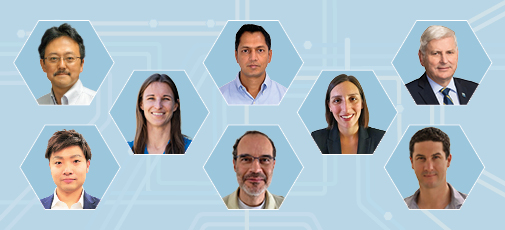
About Our Authors
More than 2,500 organic synthesis experts from around the world have contributed to Science of Synthesis. Among them are some renowned chemists and researchers from the organic synthesis community who have won the Nobel Prize.
Information for Authors
Science of Synthesis is a multi-author reference work. Contributors are individually invited by our volume editors, who select authors based on their specialized knowledge and expertise in a given area of chemistry.
Latest News from the SOS Editorial Office

SOS ECAB: Meet Prof. Sobi Asako
The Science of Synthesis Early Career Advisory Board (ECAB) is a 3-year program to help promote young talented chemists. Learn more about our ECAB members and read the short interview of Prof. Sobi Asako.

Japanese Scientists’ Great Contributions to SOS
Thieme Chemistry maintains close partnerships with organic chemists in Japan who make a significant contribution to the reference work Science of Synthesis.

SOS ECAB: Meet Prof. Christian A. Malapit
The Science of Synthesis Early Career Advisory Board (ECAB) is a 3-year program to help promote young talented chemists. Learn more about our ECAB members and read the short interview of Prof. Yang Yang.

SOS ECAB: Meet Prof. Yang Yang
The Science of Synthesis Early Career Advisory Board (ECAB) is a 3-year program to help promote young talented chemists. Learn more about our ECAB members and read the short interview of Prof. Yang Yang.
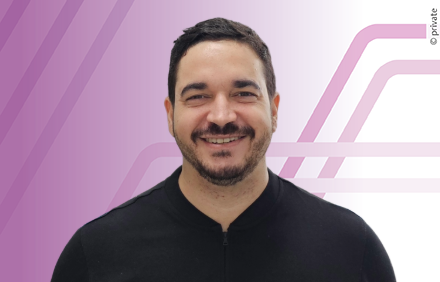
SOS ECAB: Meet Prof. Caio Costa Oliveira
The Science of Synthesis Early Career Advisory Board (ECAB) is a 3-year program to help promote young talented chemists. Learn more about our ECAB members and read the short interview of Prof. Caio C. Oliveira.

SOS ECAB: Meet Prof. C. Rose Kennedy
The Science of Synthesis Early Career Advisory Board (ECAB) is a 3-year program to help promote young talented chemists. Learn more about our ECAB members and read the short interview of Prof. C. Rose Kennedy

Interview with Former ECAB Member Prof. Emilio Carlos de Lucca
Read our interview with former SOS ECAB Member Emilio Carlos de Lucca as he shares insights on total synthesis, the future of organic chemistry, and the importance of science communication.
Call for Nominations for the 2027 Women in Chemistry (WiC) Awards!
Stuttgart: Call for nominations for the 2027 Dr. Margaret Faul Women in Chemistry and Women in the Chemical Industry Awards to recognize the outstanding achievements of women in organic chemistry is open until 11 December, 2026.

SOS ECAB: Meet Prof. Albert Granados Toda
The Science of Synthesis Early Career Advisory Board (ECAB) is a 3-year program to help promote young talented chemists. Learn more about our ECAB members and read the short interview of Prof. Albert Granados Toda
SOS: All FID-Chemie-Funded Licenses for 2026 Allocated!
Stuttgart: A limited number of SOS licences were available through the FID Chemie for researchers affiliated with publicly funded institutions in Germany. For the year 2026, all licences have been claimed and no additional SOS licences are currently available. Additional licences will be available by January 2027 at the latest.…
Achieve Your Goal with Science of Synthesis
“Science of Synthesis is the so-called “encyclopedia” of organic synthetic methods. It contains the most useful organic and organometallic transformations and experimental protocols as selected by over 2.500 chemists, including many big names in organic chemistry, and is overseen by an esteemed international editorial board.Furthermore, Science of Synthesis includes discussion of the most reliable synthetic methods, as recommended by experts, covering details such as scope, yields, and safety aspects. This comprehensive coverage of evaluated information and synthetic procedures for organic transformations provides intuitive and quick access to detailed information about the reactions you want to investigate. Science of Synthesis is a powerful tool that enables researchers in industry to truly enhance their skills as researchers, and graduate and undergraduate students to quickly gain a wealth of knowledge that will prepare them for future careers in academia or industry.In view of these advantages, I strongly recommend Science of Synthesis to researchers and academics, and to graduates and undergraduates studying synthetic organic chemistry.”