
SOS ECAB: Meet Prof. C. Rose Kennedy
Science of Synthesis Early Career Advisory Board (SOS ECAB)
Meet the members of the Science of Synthesis Early Career Advisory Board for 2025-2027!
Find out from the interview below, which field of organic chemistry they are most interested in and why, which chemist would they like to meet, which challenges they see for young upcoming chemists and how to handle them, and last but not least: what they do to relax after a busy day!
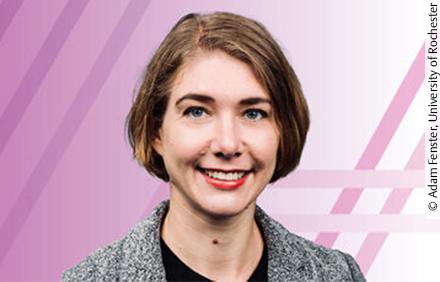
Six Questions to Prof. C. Rose Kennedy
1. Which field of organic chemistry are you interested in the most and why?
My research interests are best described as mechanistic organic and organometallic chemistry. I have always been driven to understand the world (and the chemical processes crucial to sustaining our lives) at a fundamental, molecular level. On a more practical level, I find that these fundamental insights are the essential building blocks for innovation in the pursuit of new and more efficient processes and transformations. In this vein, it’s especially challenging and rewarding to focus on the catalytic reactivity of abundant metal elements due to their complex and versatile reactivity patterns. There is much we still don’t understand, and the potential to use mechanistic insight to harness unconventional, efficient, and/or sustainable reaction manifolds is immense.
2. If there is one thing you would like people to understand about your research, what would that be?
The fundamental reactivity principles driving catalysis are conserved from enzymes to heterogeneous catalysts and everything in between. My group draws inspiration from the full breadth of this field. We focus on the cooperative reactivity principles that drive the most efficient biological and heterogeneous catalysts to inform the design of modular, selective, and general molecular catalysts that enable widespread application for synthesis towards a sustainable and healthy society.
3. What do you do to relax after a busy day?
I find it restorative to spend time out in nature and with the people I care about. As such, I always look forward to long evening walks with my spouse and our dogs.
4. Given the chance to meet any chemist (living or dead) who would it be and why?
Given the opportunity to time-travel, I would want to meet Scottish chemist Elizabeth Fulhame. Her work on the photoreduction of metals (published in 1794) contradicted (correctly) many of the prevailing theories of the time and provided the earliest known conceptual framework for catalysis. I would have loved to discuss the long-term implications of her work and learn more about her experiences as a woman scientist working independently in an era where that was nearly unthinkable.
5. Which potential do you see in organic chemistry in the future?
Looking ahead, development of efficient methods for constructing both organic small and macromolecules will continue to play a critical role in meeting grand challenges facing society: producing and storing clean energy, manufacturing and recycling materials, nourishing our population through agriculture and medicine while sustaining native species. Even as the day-to-day work of organic chemists evolves to incorporate new tools including automation and artificial intelligence, ingenuity in synthesis and mechanistic elucidation remains at the core of the field. Together this emphasis on combining human insight with enhanced efficiency through the collection and analysis of larger and larger data sets provides exciting opportunities for innovation.
6. Which difficulties are there for young upcoming chemists in your field? Do you have any tips?
With the rapid increase in the amount and availability of information, it is easy to get overwhelmed. Establishing a sustainable strategy to “keep-up with the literature” is necessary to generate informed ideas, hypotheses, and experimental designs. I find it helpful to block off “reading” time every week and use RSS feeds, automated alerts, and a citation manager to keep track of what’s new. Using curated databases like Science of Synthesis is also very helpful for balancing an awareness of the latest results with the longer-term foundations and context of the work.
Learn More about Rose Kennedy’s Research in this SOS Case Study
Explore the following SOS Case Study by Jessica Navarro Vega. She is currently a Ph.D. student in Prof. C. Rose Kennedy’s group, where she works on developing new nickel-catalyzed methodologies for cross-coupling reactions.