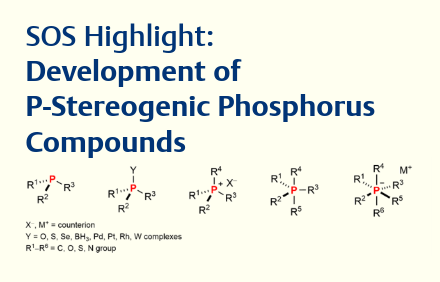
Science of Synthesis Article Highlight: Development of P-Stereogenic Phosphorus Compounds
The new Science of Synthesis reference article Development of P-Stereogenic Phosphorus Compounds, authored by Jérôme Bayardon, Sylvain Jugé, and Raluca Malacea (Université de Bourgogne, France), is now available online.
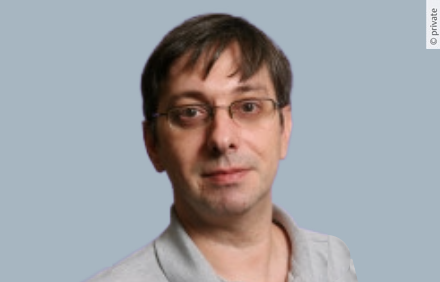
Jean-Luc Montchamp: “A veritable tour de force!”
Volume Editor for Updates on Organophosphorus Chemistry
“This chapter on Development of P-Stereogenic Phosphorus Compounds is a veritable tour de force! As in other fields, asymmetric organophosphorus chemistry is growing rapidly. This careful and exhaustive review of recent contributions is sure to become a great resource for organophosphorus chemists, and in fact synthetic chemists at large.”
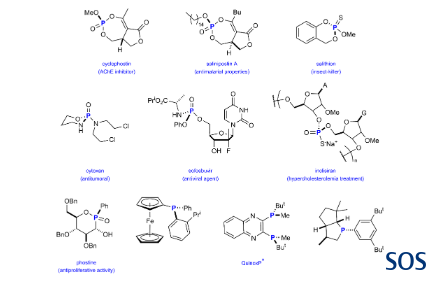
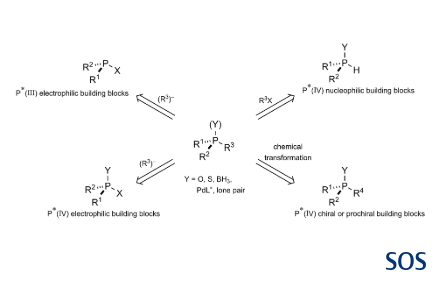
A Selection of Useful P-Chirogenic or P-Chirotopic Phosphorus Compounds
P-Stereogenic phosphorus compounds play an increasingly important role across modern chemistry, with applications ranging from asymmetric catalysis and synthetic methodology to pharmaceuticals, agrochemicals, materials science, and nucleic acid therapeutics. In particular, the growing importance of phosphorus chirality in oligonucleotide-based medicines has intensified interest in the efficient preparation of stereochemically defined phosphorus-containing compounds.
This comprehensive review provides an authoritative overview of the synthesis of all major classes of P-stereogenic tri- to hexacoordinate phosphorus compounds. The authors survey strategies based on classical resolution methods, deracemization, stereoselective synthesis using chiral auxiliaries, and modern asymmetric catalytic approaches.
Main Retrosynthetic Strategies for the Stereoselective Synthesis of P-Chirogenic Phosphorus Compounds
Spanning approximately 200 pages and supported by 946 references published between 1911 and 2026, the contribution offers an exceptionally broad perspective on the field. Remarkably, all references were consulted in their original print form by the authors. As the authors note, the chapter aims to provide “an overall view on the preparation of all classes of P-stereogenic compounds”, bringing together more than a century of foundational research alongside the latest developments in this rapidly evolving area.
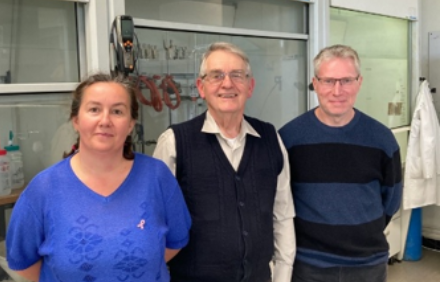
Meet the Autors: J. Bayardon | R. Malacea | S. Jugén
Jérôme Bayardon
Jérôme Bayardon obtained his PhD in organic and organometallic chemistry and asymmetric catalysis at the University of Lyon in 2004 under the supervision of Prof. Denis Sinou. Following postdoctoral research with Prof. Andreas Börner at the Leibniz Institute for Catalysis in Rostock, Germany, he joined the University of Bourgogne in 2006 in the group of Prof. Sylvain Jugé, and since 2017 has been a member of the group of Prof. Pierre Le Gendre. His research focuses on the synthesis of P-chirogenic phosphorus compounds and amidine derivatives for applications in coordination chemistry and transition-metal-catalyzed asymmetric catalysis.
Raluca Malacea
Raluca Malacea obtained her engineering degree from the Polytechnic School of Bucharest and her doctorate in coordination chemistry at LCC Toulouse under the supervision of Prof. Rinaldo Poli and Dr. Eric Manoury. Following postdoctoral research with Prof. Pierre Dixneuf in Rennes and with Profs. Didier Bourissou and Montserrat Gomez in Toulouse, she joined CNRS as a Research Fellow at the ICMUB laboratory in Dijon in 2009, where she worked in the group of Sylvain Jugé. She currently works with Prof. Pierre Le Gendre, and her research interests include metal complexes containing nitrogen- and phosphorus-based ligands for catalytic and therapeutic applications.
Sylvain Jugé
Sylvain Jugé obtained his PhD on P-stereogenic phosphine oxides in 1984 under the supervision of Prof. Henri Kagan at the University of Paris-Sud Orsay (Kagan, Nobel Prize in Chemistry 2026). Following postdoctoral research with Prof. Jean-Pierre Genêt at the University Pierre et Marie Curie, he held academic positions at several Paris institutions before becoming Professor at the University of Cergy-Pontoise in 1991 and joining the University of Bourgogne (Dijon) in 2001. Professor Emeritus since 2017, he is recognized for his contributions on the stereoselective synthesis of P-chirogenic phosphorus compounds, Wittig-amino acid reactions, amino acids fluorolabelling, metal-catalyzed C=C bond cleavage and monohydroxylation under molecular oxygen, and selective extracting agents for hydrometallurgy. He has supervised numerous graduate students and postdoctoral researchers, authored 147 publications and several book chapters, and is inventor on 20 patents. His work has an h-index of 34.