
SOS ECAB: Meet Dr Joshua P. Barham
Science of Synthesis Early Career Advisory Board (SOS ECAB)
Meet the members of the Science of Synthesis Early Career Advisory Board for 2025-2027!
Find out from the interview below, which field of organic chemistry they are most interested in and why, which chemist would they like to meet, which challenges they see for young upcoming chemists and how to handle them, and last but not least: what they do to relax after a busy day!
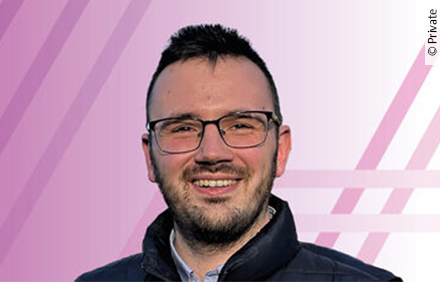
Six Questions to Dr. Joshua P.Barham
1. Which field of organic chemistry are you interested in the most and why?
I’m a radical advocate for radical chemistry. The ease with which one can get their hands on radicals these days with technology platforms like photo- and electrochemistry, and also developing understanding in first-row transition catalysis, have opened new dimensions of radical chemistry that are shaping the way chemists now do organic synthesis.
2. If there is one thing you would like people to understand about your research, what would that be
We use visible light and electricity, separately or in combination, to discover reactions that engage unactivated molecules, like persistent pollutants and biomass, in order to step towards a circular carbon economy for the sustainable future of organic synthesis.
3. What do you do to relax after a busy day?
i) Listen to low-volume funk, ii) tinker on my Clavier, iii) spend time with my partner, our human toddler child and our cuddly cat child ‘Mochi’.
4. Given the chance to meet any chemist (living or dead) who would it be and why?
Being British and a fan of radicals, probably Professors Jack Baldwin and Derek Barton. Baldwin was very strict with organic molecules, making a set of rules that – he said – they all ‘must obey’. Barton was said to have yielded in chemistry Genius only to Robert B. Woodward. Sound like special characters and ones from whom I’d love to hear wild views from on aspects of chemistry and life. In particular, I’d be interested in their impressions on how the ways we produce, disseminate and consume science changed over the decades.
5. Which potential do you see in organic chemistry in the future?
Organic chemistry will move toward different feedstocks for carbon. As a consequence of the transition away from fossil fuels and global sustainability development goals (SDGs), I foresee chemists will increasingly depend less on petrochemical-derived feedstocks and in turn depend more on biomass-derived or persistent chemical waste-derived molecules to fuel academic and industrial organic synthesis. In that context, de-functionalization reactions will become more important as will methods that engage strong bonds / stubborn molecules with less accessible redox properties.
6. Which difficulties are there for young upcoming chemists in your field? Do you have any tips
The list is long – two in particular are i) the ever-growing platforms and metrics for comparison with peers and ii) the changing ways of societal interaction (social media) that encourage short attention spans making it harder to focus on deep, meaningful scientific reading. Tips would be to i) research the ‘Imposter Phenomenon’ by reading the book ‘You Are (Not) a Fraud’ (by Dr. Marc Reid), ii) use RSS feeds to ‘shortlist’ papers of interest. Print out selected papers, earmark time to read them in a quiet place, front to back, rather than skimming through on a computer screen. Make a regular commitment with your supervisor to read ‘x’ number of papers per week and summarize in a short digest report.
Learn More about the SOS ECAB
The Science of Synthesis Early Career Advisory Board (ECAB) is a 3-year program to help promote young talented chemists. Learn more about the members of our current SOS ECAB.